- 24/7 Emergency Support
- +91 8910952931
- care@nurtura.org.in

Elder Care Services: From Caregiving to Complete Senior Well-Being

Senior Citizen Care Services in Kolkata: A Complete Guide for Families
August 19, 2026
Home Nursing Care for Seniors Living Alone: Safety Tips for Families
September 2, 2026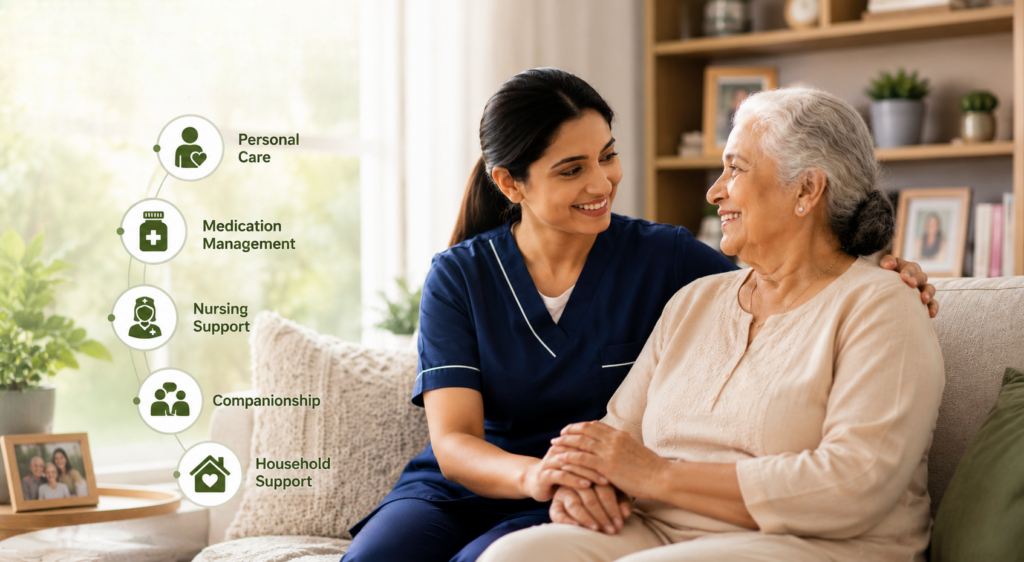
Growing older is not a problem to be managed; it is a stage of life that deserves the same attention to quality, dignity, and joy as any other. Yet for decades, “elder care” has been narrowly understood as help with daily tasks: bathing, dressing, medication reminders, a companion during doctor’s visits. These are essential services, but they are only one part of a much bigger picture.
At Nurtura Care, we believe elder care should mean something more expansive, not just keeping seniors safe and comfortable, but helping them live full, connected, and meaningful lives. This shift, from basic caregiving to complete senior well-being, is reshaping how families and care providers think about aging.
What Traditional Elder Care Covers
Before looking at what’s changing, it helps to understand the foundation. Traditional elder care services typically include:
- Personal care assistance — help with bathing, grooming, dressing, and mobility
- Medication management — ensuring prescriptions are taken correctly and on time
- Nursing support — wound care, vital monitoring, and post-hospitalization recovery
- Companionship — someone present for conversation, meals, and daily routines
- Household support — cooking, cleaning, and errands that become harder with age
These services remain the backbone of elder care, and they will always matter. A senior who is unsafe or in physical discomfort cannot focus on anything else. But safety and hygiene are the starting point, not the destination.
Why “Complete Well-Being” Is the Next Step
Research on aging consistently points to the same conclusion: physical health is only one determinant of how well a person ages. Emotional health, social connection, mental stimulation, and a sense of purpose matter just as much — sometimes more. Seniors who are physically well cared for but socially isolated often experience faster cognitive decline, higher rates of depression, and lower overall satisfaction with life.
This is the gap that complete senior well-being aims to close. It asks a different question than traditional caregiving does. Instead of “Is this person safe and clean?” it asks, “Is this person thriving?”
The Four Pillars of Complete Senior Well-Being
1. Physical Well-Being: This still includes the fundamentals — nutrition, mobility support, chronic disease management, and physiotherapy — but with a preventive, active approach rather than a purely reactive one. Gentle exercise routines, balanced diets tailored to age-related needs, and regular health screenings help seniors stay independent for longer.
2. Emotional Well-Being: Loneliness is one of the most under-addressed health risks among the elderly. Emotional well-being means consistent, warm human connection — not just a caregiver completing tasks, but someone who listens, remembers preferences, and treats the senior as a person with a history and personality, not a set of needs.
3. Mental and Cognitive Well-Being: Keeping the mind active is as important as keeping the body moving. This can include memory-focused activities, puzzles, reading, music, and conversation that genuinely engage a senior’s interests and past experiences — especially valuable for those managing early cognitive decline or conditions like dementia.
4. Social Well-Being: Family visits, community engagement, festivals, and shared meals all combat isolation. Elder care that facilitates connection — with family, peers, or community groups — helps seniors maintain their identity and sense of belonging, rather than feeling like passive recipients of care.
How This Looks in Practice
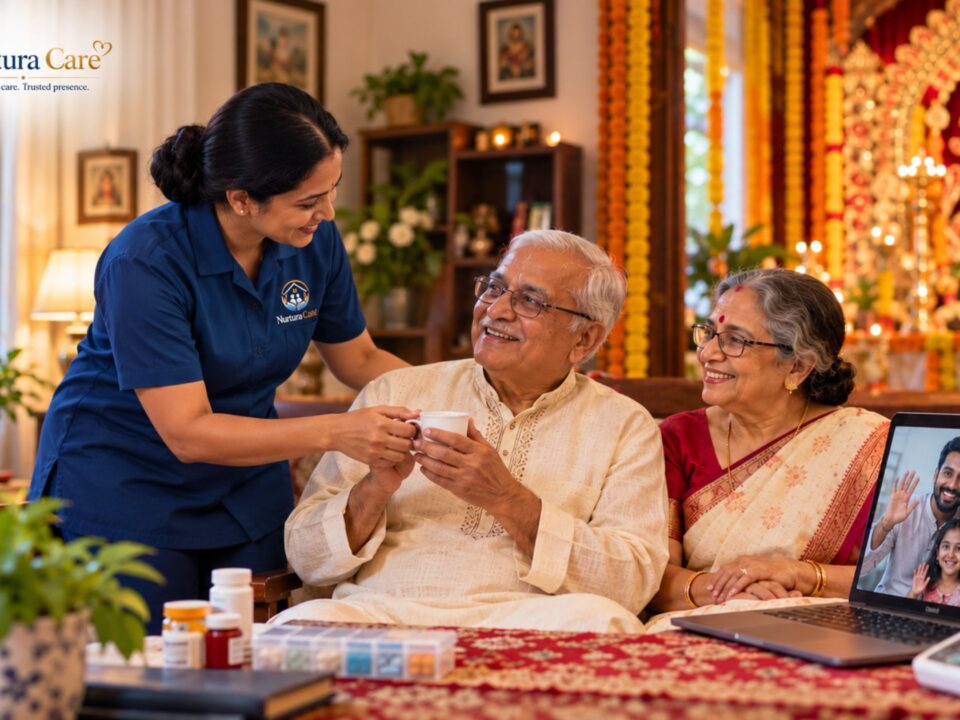
A complete elder care approach doesn’t discard the essentials — it builds on them. A caregiver trained in this broader philosophy might still help a senior get dressed in the morning, but they’ll also chat about the news, encourage a short walk, sit with them for a hobby they enjoy, and check in on how they’re really feeling that day.
Families benefit too. Knowing that a loved one is not just “being looked after” but genuinely cared for reduces the guilt and anxiety that often come with placing a parent or grandparent in someone else’s care — whether that’s in-home support or an assisted living arrangement.
Choosing the Right Elder Care Partner
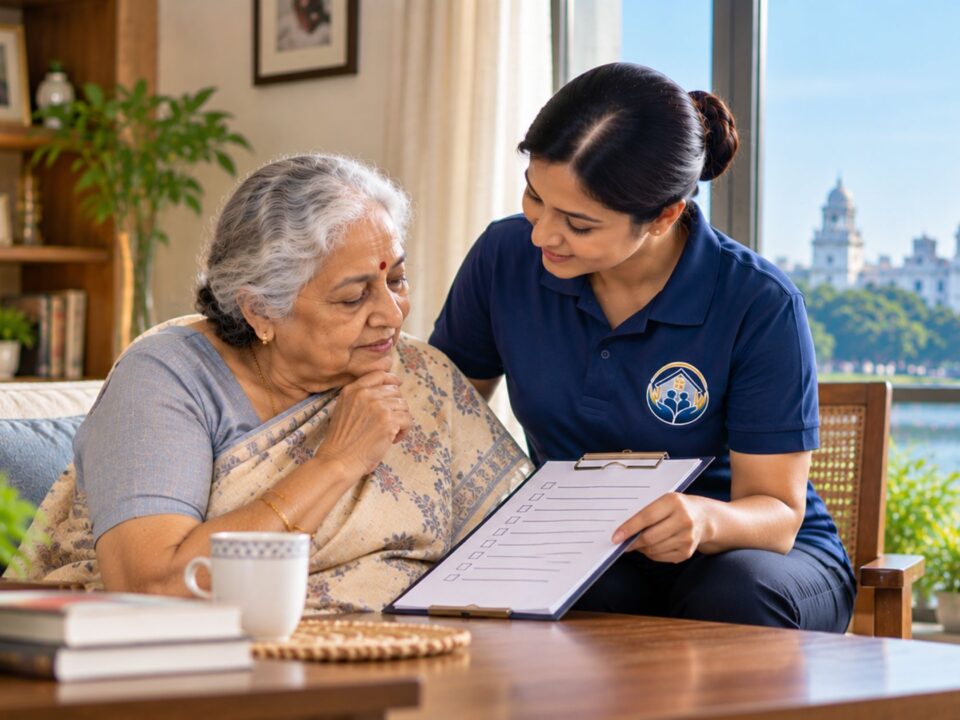
When evaluating elder care services, families should look beyond a checklist of tasks and ask:
- Are caregivers trained to recognize emotional and cognitive needs, not just physical ones?
- Is there continuity of care so seniors build real relationships with the people looking after them?
- Does the service offer engagement — activities, conversation, community — not just assistance?
- Is communication with family transparent and regular?
- Can care plans adapt as a senior’s needs evolve over time?
The right partner treats each senior as an individual with a unique history, preferences, and personality — not a routine to be completed.
Frequently Asked Questions
1. What is the difference between caregiving and complete senior well-being?
Caregiving typically refers to hands-on support for daily tasks — bathing, dressing, medication, mobility. Complete senior well-being includes all of that, but also addresses emotional health, mental stimulation, and social connection, aiming for seniors to thrive rather than simply be maintained.
2. How do I know if my elderly parent needs professional elder care?
Common signs include difficulty managing daily tasks like cooking or bathing, missed medications, frequent falls, noticeable weight loss, social withdrawal, or a decline in mood or memory. Even if physical needs are minimal, increasing loneliness or disinterest in usual activities can be a sign that support would help.
3. Can elder care services be customized to a senior’s specific needs?
Yes. A good elder care provider builds a care plan around the individual — their health conditions, daily routine, personality, and interests — and adjusts it as needs change over time, rather than offering a one-size-fits-all service.
4. How does elder care help with loneliness and isolation?
Beyond physical assistance, caregivers trained in complete well-being spend time in genuine conversation, encourage hobbies and social activities, and help maintain family and community connections — directly addressing one of the most significant risks to senior mental health.
5. Is elder care only for seniors with serious medical conditions?
No. Elder care ranges from occasional companionship and light assistance for healthy, active seniors to intensive medical and nursing support for those with chronic illnesses or limited mobility. It’s a spectrum of support, not a service reserved only for the seriously ill.
6. What should families look for when choosing an elder care provider?
Look for trained caregivers who address emotional and cognitive needs alongside physical care, provide continuity in who provides care, maintain regular communication with family, and are willing to adapt the care plan as circumstances evolve.
Conclusion
Elder care is undergoing a quiet but important transformation. What was once defined narrowly as caregiving — bathing, feeding, monitoring — is increasingly understood as something broader: a commitment to a senior’s complete well-being, encompassing their body, mind, emotions, and social world.
This shift matters because aging well isn’t just about avoiding harm. It’s about continuing to live with purpose, connection, and dignity, regardless of physical limitations. Families searching for elder care shouldn’t have to choose between safety and quality of life; they should expect both.
At Nurtura Care, this is the standard we hold ourselves to: care that goes beyond tasks completed, toward lives genuinely well-lived. Because every senior deserves not just to be cared for, but to feel truly cared about.