- 24/7 Emergency Support
- +91 8910952931
- care@nurtura.org.in

7 Safe Physiotherapy Exercises for Seniors at Home

How to Choose the Right Home Nurse for an Ageing Parent
September 10, 2026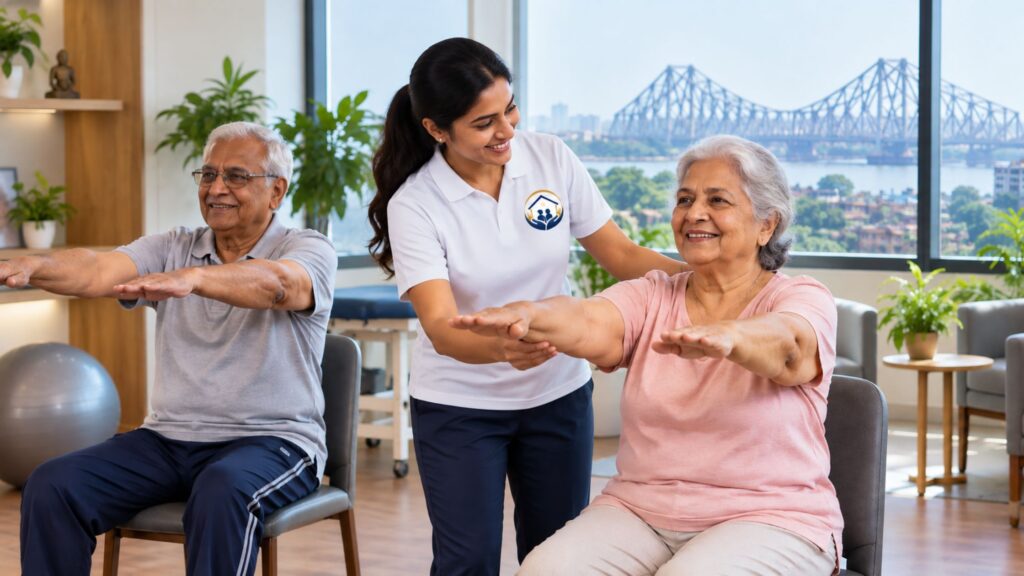
As we age, staying active becomes one of the most important things we can do for our health — yet it’s also when the risk of falls, joint pain, and muscle weakness increases. The good news is that seniors don’t need a gym or elaborate equipment to stay strong and mobile. A well-designed home physiotherapy routine can improve balance, flexibility, and independence, all from the comfort of home.
Below are 7 safe, physiotherapist-approved exercises seniors can do at home, along with tips on when professional support — like Senior Citizen Care at Home Kolkata services — can make the process safer and more effective.
Why Home-Based Physiotherapy Matters for Seniors
Regular, gentle movement helps seniors:
- Maintain joint mobility and reduce stiffness
- Improve balance and lower fall risk
- Support cardiovascular health
- Preserve muscle strength for daily tasks like standing, walking, and climbing stairs
- Boost mood and mental well-being
Families exploring Senior Home Care Kolkata often ask how much activity is “too much” for an elderly parent. The answer: consistency and correct form matter far more than intensity. These exercises are designed to be low-impact and easy to adapt to individual ability levels.
Always consult a doctor or physiotherapist before starting any new exercise routine, especially if the senior has a chronic condition, recent surgery, or history of falls.
1. Seated Marching
Why it helps: Improves hip flexor strength, balance, and circulation — great for seniors who are less steady on their feet.
How to do it:
- Sit tall in a sturdy chair with feet flat on the floor.
- Slowly lift one knee toward the chest, then lower it.
- Alternate legs for 10–15 repetitions per side.
Tip: Hold the sides of the chair for extra support if needed.
2. Wall Push-Ups
Why it helps: Builds upper body and chest strength without putting pressure on wrists or shoulders, unlike floor push-ups.
How to do it:
- Stand facing a wall, about an arm’s length away.
- Place palms flat on the wall at shoulder height.
- Bend elbows to bring the chest toward the wall, then push back.
- Repeat 8–12 times.
3. Heel-to-Toe Walk (Tandem Walk)
Why it helps: One of the most effective balance exercises for reducing fall risk.
How to do it:
- Stand near a wall or countertop for support.
- Place one foot directly in front of the other, heel touching toe.
- Take slow, small steps in a straight line for about 10 steps.
Safety note: This exercise should only be attempted with a stable surface nearby, or under supervision from a caregiver.
4. Seated Leg Extensions
Why it helps: Strengthens the quadriceps, which are essential for standing up, walking, and climbing stairs safely.
How to do it:
- Sit in a chair with your back straight.
- Slowly extend one leg until it’s straight; hold for 2–3 seconds.
- Lower it back down and repeat 10 times per leg.
5. Shoulder Rolls
Why it helps: Releases tension in the neck and shoulders and improves upper-body mobility — useful for seniors who spend a lot of time sitting.
How to do it:
- Sit or stand comfortably.
- Roll shoulders forward in a circular motion 10 times.
- Reverse direction and repeat.
6. Ankle Pumps
Why it helps: Improves circulation in the lower legs and helps prevent stiffness or swelling, especially for seniors with limited mobility.
How to do it:
- Sit with legs extended or lie down comfortably.
- Point toes forward, then flex them back toward the shins.
- Repeat 15–20 times.
7. Sit-to-Stand Exercise
Why it helps: Mimics a movement seniors perform many times a day, building the functional leg strength needed for independence.
How to do it:
- Sit in a sturdy chair with feet shoulder-width apart.
- Lean slightly forward and push through the heels to stand up.
- Slowly lower back down with control.
- Repeat 5–10 times.
Tip: Use armrests for support until confidence and strength improve.
Safety Tips for At-Home Physiotherapy
- Always warm up with a few minutes of gentle movement before starting.
- Keep water nearby and take breaks as needed.
- Wear supportive, non-slip footwear.
- Stop immediately if there’s pain, dizziness, or shortness of breath.
- Perform balance-related exercises near a wall, chair, or stable surface.
For families who are unable to personally supervise these routines every day, Physiotherapy for Elderly at Home services can help schedule regular physiotherapy sessions, track progress, and adjust exercises safely as a senior’s needs change over time.
FAQ: Physiotherapy Exercises for Seniors at Home
1. How often should seniors do these exercises? Most physiotherapists recommend 3–5 sessions a week, with each session lasting 15–20 minutes. Consistency matters more than duration — short, regular sessions are safer and more sustainable than infrequent, intense ones.
2. Are these exercises safe for seniors with arthritis? Yes, in general, these are low-impact movements that are gentle on the joints. However, seniors with arthritis should move slowly, avoid pushing through pain, and ideally get a routine personalized by a physiotherapist.
3. What if a senior lives alone — is it still safe to exercise at home? It’s safer with supervision, especially for balance exercises like the heel-to-toe walk. Families in Kolkata often turn to Senior Home Care Kolkata providers to ensure a trained caregiver or physiotherapist is present during exercise sessions.
4. Can these exercises help prevent falls? Yes. Balance and strength training — like seated marching, sit-to-stand, and tandem walking — are proven to be among the most effective ways to reduce fall risk in older adults.
5. When should a caregiver or physiotherapist be involved instead of doing exercises alone? If the senior has had a recent fall, surgery, stroke, or a diagnosed mobility condition, a professional should design and supervise the routine. This is where Senior Citizen Care at Home Kolkata services add real value — combining medical awareness with day-to-day support.
6. How can families coordinate ongoing physiotherapy care for elderly parents? Many families juggling work and caregiving responsibilities rely on structured Senior Care Coordination Kolkata services to manage physiotherapist visits, monitor progress, and keep exercise plans consistent and safe.
Final Thoughts
Staying active is one of the simplest, most powerful ways for seniors to protect their independence and quality of life. These 7 exercises are a safe starting point for most older adults — but the right routine, pace, and supervision will always depend on individual health needs.
If you’re looking for trusted, compassionate support for a loved one’s physiotherapy and daily care needs, Nurtura offers dedicated senior home care, senior citizen care, and care coordination services in Kolkata — helping families ensure every exercise session is both safe and effective.