- 24/7 Emergency Support
- +91 8910952931
- care@nurtura.org.in

How to Care for Ageing Parents While Living Abroad: A Complete Guide for NRIs

How to Choose the Right Home Care Plan for Your Parents?
July 23, 2026
There’s a particular kind of worry that comes with a 2 a.m. phone call from home. For millions of Non-Resident Indians, that worry is a familiar companion. You’ve built a life abroad — a career, a family, a home — but your heart still checks in on a mother managing her blood pressure alone, or a father who insists he’s “perfectly fine” living by himself.
Caring for ageing parents from thousands of miles away is one of the quiet, unspoken challenges of the NRI experience. It doesn’t come with a manual. This guide brings together the practical steps, tools, and support systems that can help you build a real safety net for your parents in India — even while you’re building your life somewhere else.
Why NRI Parents Care Looks Different
When you live in the same city as your parents, care happens in small, everyday ways — a shared meal, a ride to the clinic, a hand on the shoulder during a bad day. Distance removes all of that. What’s left is a gap that many NRIs try to fill with guilt, frequent flights, and long-distance phone calls that never quite feel like enough.
NRI parents care isn’t just about logistics — though there’s plenty of that too. It’s about rebuilding trust that your parents are genuinely safe and supported, even on the days you can’t be there. That means thinking through a few interconnected pieces: health, safety, companionship, and communication.
Start With an Honest Health Assessment
Before you can put any system in place, you need a clear picture of where your parents actually stand — not the reassuring version they tell you on video calls, but the real one.
A few starting points:
- Schedule a full health check-up the next time you’re in town, or arrange one through a trusted local doctor or diagnostic service.
- Ask direct questions about medications, mobility, memory, sleep, and mood — not just “how are you feeling?”
- Loop in a sibling, relative, or trusted family friend who can visit periodically and give you an unfiltered update.
- Note any early signs of cognitive decline, frequent falls, or withdrawal from social activities, since these often get minimised over the phone.
This assessment becomes the foundation for everything else — it tells you whether your parents need occasional check-ins or more structured, everyday support.
Build a Local Support System You Can Trust
This is usually the hardest part for NRIs to solve alone. You can set reminders, order groceries online, and pay bills from anywhere in the world — but you can’t be physically present for a fall, a fever at midnight, or the simple comfort of someone checking in each day.
This is where a search for elderly care at home near me usually begins — often at 2 a.m., after a scare that could have been avoided. It’s worth doing that search before a crisis, not during one.
If your parents live in and around Kolkata, Howrah, North 24 Parganas, South 24 Parganas, or Hooghly, this is also a good time to look into home care providers already established in these areas, so help is close by rather than something you’re scrambling to arrange from a distance.
Look for services that offer:
- Trained caregivers or nurses who can visit daily or live in, depending on your parents’ needs
- Medical support at home, including help with medication schedules, physiotherapy, or post-surgical care
- Companionship services, so your parents have regular, warm human contact — not just clinical care
- Emergency response systems, so someone can reach your parents quickly if something goes wrong
- Regular reporting back to family, so you’re not left guessing how things are actually going
A good home care provider doesn’t just perform tasks — they become the eyes and ears you can’t be, and the friendly, familiar face your parents look forward to seeing.
Use Technology to Bridge the Distance
Technology won’t replace a caregiver’s hands or a doctor’s visit, but it can meaningfully close the information gap that distance creates.
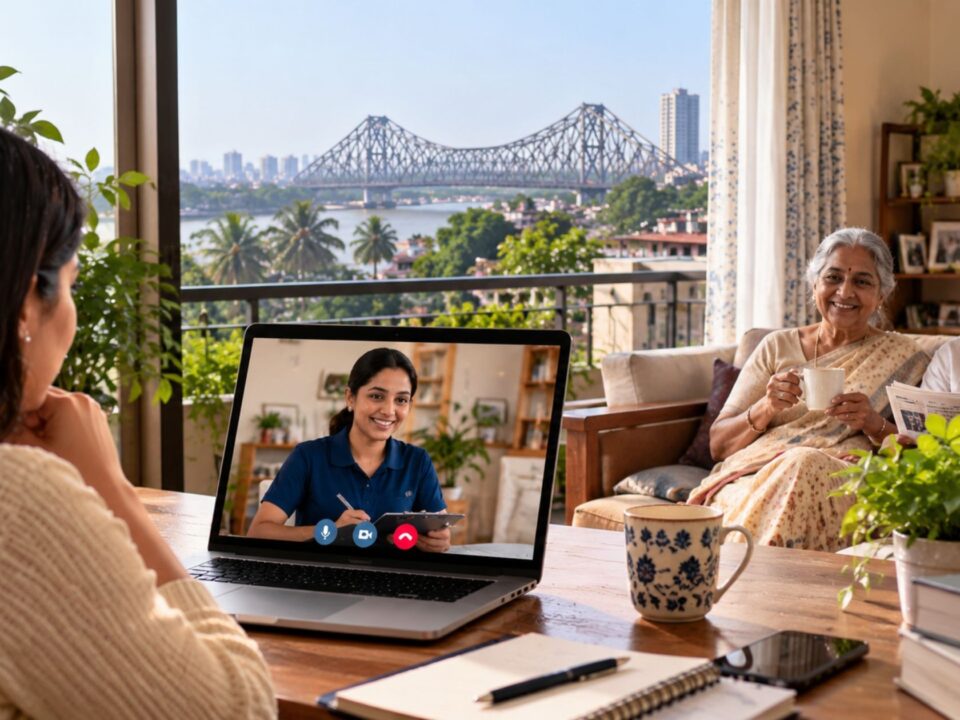
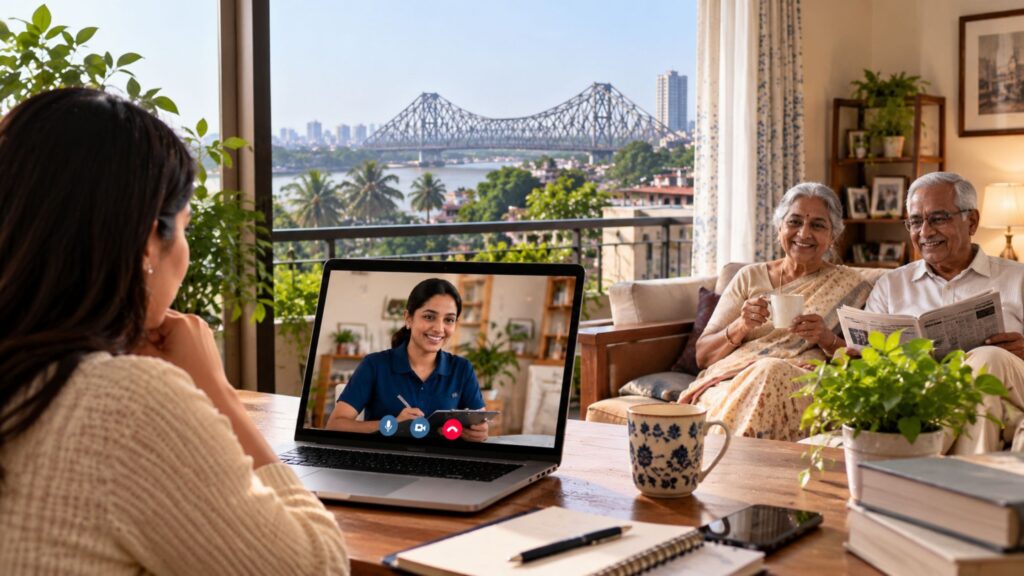
- Video calls on a fixed schedule work better than sporadic ones — parents adjust and look forward to them.
- Medical alert devices or wearables can detect falls or irregular vitals and alert family or caregivers instantly.
- Shared family group chats with siblings or relatives in India keep everyone updated without you having to chase for information.
- Digital medicine reminder apps help parents stay consistent, especially with multiple prescriptions.
- Home security cameras, used thoughtfully and with your parents’ consent, can offer peace of mind for both sides.
None of this should feel like surveillance. The goal is reassurance, for you and for them — a way of staying close without hovering.
Plan the Financial and Legal Groundwork Early
Caring for ageing parents also means having conversations that are easy to keep postponing. Address these while things are calm, not during a medical emergency:
- Health insurance that’s adequate for their age and any pre-existing conditions, ideally with cashless hospital networks
- Power of attorney so a trusted person in India can make decisions or handle paperwork on your behalf when needed
- A written record of bank accounts, insurance policies, property documents, and medical history, shared securely with someone local
- A clear point of contact — a sibling, relative, or care coordinator — who knows who to call and what to do in an emergency
Having this groundwork in place doesn’t just protect your parents — it protects you from making rushed decisions under stress, from another time zone, at 3 a.m.
Don’t Underestimate the Emotional Side
Caring for ageing parents from abroad carries an emotional weight that’s easy to overlook amid the logistics. Guilt is common — for missing birthdays, for not being there during illness, for building a life elsewhere. It helps to remember that presence isn’t only physical. A consistent phone call, a well-organised care plan, and a trustworthy support system at home are all real, meaningful forms of care.
It’s also worth checking in on your parents’ emotional wellbeing, not just their physical health. Loneliness is one of the most under-addressed issues among elderly parents of NRIs, and companionship — whether from a caregiver, a neighbour, or a community group — matters as much as medical support.
Building a Long-Term Care Plan
A single visit or one setup rarely covers every stage of ageing. As needs evolve, your plan should too:
- Reassess regularly — health needs at 65 look different from those at 80.
- Keep communication channels open between caregivers, doctors, and family members in India and abroad.
- Revisit the care setup every time you visit, rather than assuming what worked last year still works now.
- Involve your parents in decisions about their own care wherever possible — it preserves their dignity and independence.
Frequently Asked Questions
1. How can I start caring for ageing parents if I live in a different country?
Begin with an honest, up-to-date health assessment, then build a local support system — a trusted relative, a home care service, or both — that can act as your eyes and ears. Pair this with regular communication and a clear emergency plan, so you’re not starting from scratch if something goes wrong.
2. What does NRI parents’ care actually involve on a day-to-day basis?
It usually combines a few things: scheduled check-ins (calls or video), a local point of contact who can respond quickly, help with medications and doctor visits, and companionship so your parents aren’t isolated. The exact mix depends on how independent your parents currently are.
3. How do I find reliable elderly care at home near me for my parents in India?
Look for a provider that offers trained, background-verified caregivers, transparent reporting back to family, and flexible plans — from a few hours a day to live-in support. It helps to arrange a trial period and speak directly with the caregiver before committing long-term, so you know your parents are comfortable with them.
4. What should I do in a medical emergency if I can’t get there quickly?
Have a plan in place before it’s needed: a local emergency contact, a nearby hospital already identified, health insurance details on hand, and a caregiver or family member authorised to make immediate decisions. A medical alert device or wearable can also help catch problems early, before they become emergencies.
5. How often should I revisit my parents’ care plan?
At least once a year, or any time there’s a noticeable change in health, mobility, or memory. Needs at 65 are rarely the same as needs at 80, so treat the plan as something that evolves rather than a one-time setup.
6. How can I support my parents emotionally, not just medically, from abroad?
Keep communication consistent rather than occasional — a scheduled weekly call often means more than a spontaneous one. Encourage social connection through neighbours, community groups, or a companionship-focused caregiver, since loneliness is one of the most overlooked issues among elderly parents of NRIs.
Final Thoughts
There’s no way to fully close the distance between you and ageing parents back home — but you can build a bridge sturdy enough to trust. That means combining honest health assessments, dependable local support, thoughtful use of technology, and the right conversations about finances and legal matters, well before they’re urgently needed.
Caring for ageing parents while living abroad will likely always come with some guilt and worry — that’s the nature of loving someone from a distance. But with the right systems and the right people in place, that worry can turn into confidence: confidence that your parents are safe, cared for, and never truly alone, even when you can’t be there yourself.
If your parents live in Kolkata, Howrah, North 24 Parganas, South 24 Parganas, or Hooghly, and you’d like help setting up reliable, compassionate care for them, reach out to Nurtura Care — we’re here to support your family, wherever you are.